






Plenary Speakers
DAY1: Monday, June 1, 2026
Plenary Session 19:00 - 9:30
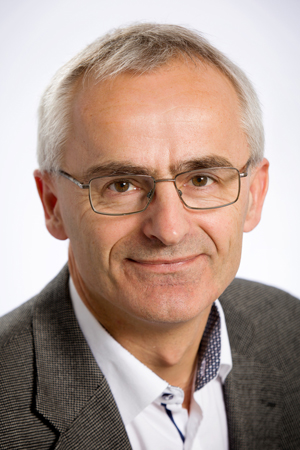
Prof. Frede Blaabjerg
Aalborg University
Presentation Title: Power Electronics Technology - Trends and Applications
Biography
Frede Blaabjerg (S’86–M’88–SM’97–F’03) was with ABB-Scandia, Randers, Denmark, from 1987 to 1988. He received his Ph.D. degree in Electrical Engineering from Aalborg University in 1995. He became an Assistant Professor in 1992, an Associate Professor in 1996, and a Full Professor of Power Electronics and Drives in 1998 at AAU Energy. From 2017 he became a Villum Investigator. He is honoris causa at University Politehnica Timisoara (UPT), Romania in 2017 and Tallinn Technical University (TTU), Estonia in 2018 as well as honory professor of University of Parma.
His current research interests include power electronics and its applications such as in wind turbines, PV systems, reliability, Power-2-X, power quality and adjustable speed drives. He has published more than 800 journal papers in the fields of power electronics and its applications. He is the co-author of ten monographs and editor of twenty books in power electronics and its applications eg. the series (4 volumes) Control of Power Electronic Converters and Systems published by Academic Press/Elsevier.
He has received 48 IEEE Prize Paper Awards, the IEEE PELS Distinguished Service Award in 2009, the EPE-PEMC Council Award in 2010, the IEEE William E. Newell Power Electronics Award 2014, the Villum Kann Rasmussen Research Award 2014, the Global Energy Prize in 2019 and the 2020 IEEE Edison Medal. He was the Editor-in-Chief of the IEEE TRANSACTIONS ON POWER ELECTRONICS from 2006 to 2012. He has been Distinguished Lecturer for the IEEE Power Electronics Society from 2005 to 2007 and for the IEEE Industry Applications Society from 2010 to 2011 as well as 2017 to 2018. In 2019-2020 he served as a President of IEEE Power Electronics Society. He has been Vice-President of the Danish Academy of Technical Sciences.
He is nominated in 2014-2021 by Thomson Reuters to be between the most 250 cited researchers in Engineering in the world.
Abstract
The world is becoming more and more electrified as consumption is steadily increasing. We expect it to double by 2050. At the same time, there is a large transition in power generation from fossil fuels to renewable energy, which altogether challenges the modern power system but also gives many new opportunities. We also see large steps being taken to electrify the transportation. where better environment, independency as well as higher efficiency are driving factors. One of the most important technologies to move this forward is the power electronics technology which has been emerging for decades and challenges are still seen in the technology usage. This presentation will be forward looking in some exciting research areas to further improve the technology and the systems it is used in. Following main topics will be discussed :
The Evolution of Power Devices
Renewable Generation
Reliability in Power Electronics and use of AI
Power Electronic based Power System
Plenary Session 29:35 - 10:05
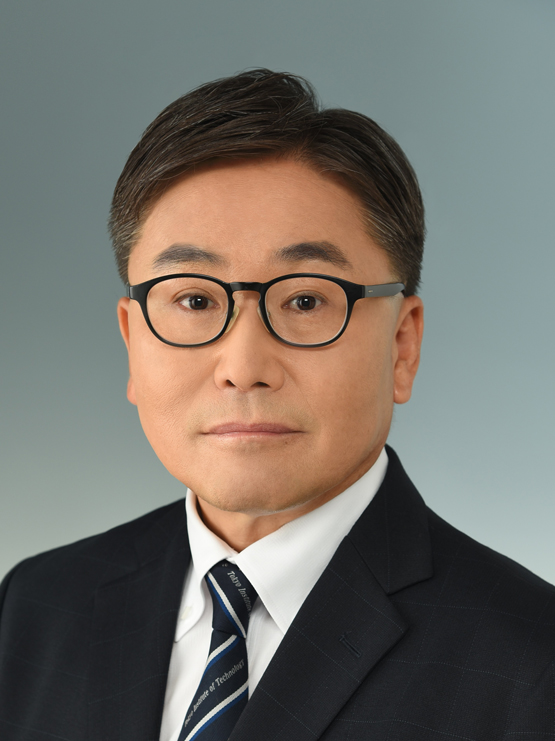
Prof. Akira Chiba
Institute of Science Tokyo
Presentation Title:Developments of Bearingless Motor and Drives
Biography
Akira Chiba (IEEE Fellow 2007, S'82- M'88- SM'97) received the B.S., M.S., and Ph.D. degrees in electrical engineering from the Tokyo Institute of Technology, Tokyo, Japan, in 1983, 1985, and 1988, respectively.
In 1988, he joined the Tokyo University of Science as a Research Associate in the Department of Electrical Engineering, Faculty of Science and Technology. Since 2010, he has been a Professor with the School of Engineering, Tokyo Institute of Technology. He will be retired on March 2026 at 65 years old retirement. In 2025 fall, Tokyo Institute of Technology merged with a medical university and changed the name as the Institute of Science Tokyo.
He has been studying magnetically suspended bearingless ac motors, super high-speed motor drives, and rare-earth-free-motors for hybrid and pure electric vehicles. He has so far authored or coauthored more than 1229 papers, including the first book on Magnetic Bearings and Bearingless Drives from Elsevier in 2005.
Dr. Chiba is the recipient of the First Prize Paper Award from the Electrical Machine Committee in the IEEE IAS in 2011 on a rare-earth-free motor, the First and Third Prize Paper Awards from IEEE Open Journal of Industry Applications in 2024 and 2025, respectively, the second and third place Best Paper Awards in IEEE Transactions on Energy Conversion in 2016 and 2017, respectively, the IEEJ Prize Paper Awards in 1998, 2005, 2018, 2023, and 2020 IEEE Nikola Tesla Award, that is one of the IEEE Technical Field Awards. In 2023, he received the IEEE PES Cyril Veinott Electromechanical Energy Conversion Award.
He served as the Secretary, Vice-Chair, Vice-Chair-Chair-Elect, Chair, and Past-Chair in the Motor Sub-Committee in the IEEE PES during 2007–2016. He has organized the Panel sessions and the combo sessions to activate the Motor Sub-Committee. He was the Technical Chair in IEEE IEMDC 2017 held in Miami, FL, USA, that was hosted by IEEE PES. He received the 2020 Distinguished Service Award from the Electric Machinery Committee in IEEE PES. He served as an Editor in IEEE Transactions on Energy Conversion in 2013-2024.
He served as the Secretary, Vice Chair, Chair, and Past Chair in IEEE-IAS Electric Machine Committee from 2016 to 2023. He improved the relationship between PES and IAS electric machine related committees. He was the ECCE Vice-Chair in 2016–2019. He was TCPRC and an Associate Editor for the IEEE Transactions on Industry Applications during 2020-2021 and 2011- 2019, respectively. He served as one of the IEEE IAS Fellow Committee Executives from 2017 to 2020. He served as a Chair in IEEE-IAS Japan Chapter during 2010–2011.
He was a Member, Chair, and Past-Chair in the IEEE Nikola Tesla Technical Field Award Committee during 2009–2014. He was a Member in IEEE Power Medal Award Committee during 2021-2023.
He was the Founding Chair in the Motor Technical Committee in Japan Society of Automotive Society and served as the chair during 2012–2018. He was the Chair of the IEE-Japan Electric Machine Committee from 2020 to 2023. He has been serving as an Examiner in the Nagamori Award since 2015. He served as one of co-chairs in the National Steering Committee in ICEMS 2024.
He was the Department Head of Electrical and Electronics Department during 2014 and 2016 and led MOOC project of the “introduction of Electrical and Electronics Engineering”, released in May 2017 through EDX. He has led active learning with the Handbook application in undergraduate and graduate course lectures. He was Head of the Electrical and Electronics Course in the Graduate School. He is Fellow in IEE-Japan. He is the first IEEE Fellow and the first Nikola Tesla Award recipient with citations including a word of “bearingless”.
Abstract
The technical developments for bearingless motors and drives are reviewed. The presenter has started bearingless motor research and development since 1980’s. This paper is the second review paper of researches and developments of bearingless motors. This paper covers some topics. In this paper, developments of magnetic geared bearingless motors, axial gap bearingless motors, switched reluctance bearingless motors, winding variations like separated, combined, no back emf, and some others, passive magnetic suspension, diamagnetic material applications, position sensorless strategies are included. The presenter is the first IEEE Fellow and Nikola Tesla Award recipient with citations including "bearingless".
Plenary Session 310:10 - 10:40
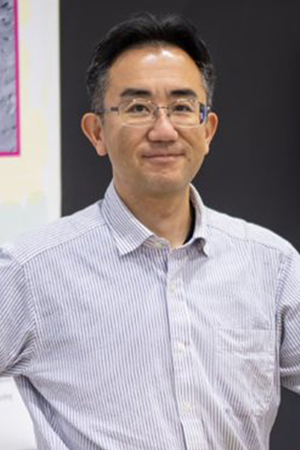
Prof. Shin-ichiro Sakai
JAXA (Japan Aerospace Exploration Agency)
Presentation Title: Looking Back on SLIM's Moon Landing, Looking Ahead to the Future
Biography
Shin-ichiro Sakai is a professor at The Institute of Space and Astronautical Science(ISAS), JAXA. He received the Ph.D. degrees in electrical engineering from the University of Tokyo in 2000. He joined ISAS in 2001, became associate professor in 2005, and became professor in 2019. His research fields are the spacecraft guidance, navigation and control issues and electro-magnetic formation flying. From 2016 to 2024, he was also a project manager of JAXA's small lunar lander "SLIM" for pin-point landing demonstration.
Abstract
The Smart Lander for Investigating the Moon (SLIM) was launched by the H-IIA vehicle on September 7, 2023, and made a precision lunar landing on January 20, 2024 (JST). The landing precision was evaluated to be within ~10 m at an altitude of approximately 50m from the Moon surface, far exceeding the target landing accuracy of 100 m and realizing the world’s first pinpoint landing. In this plenary speech, we will review the achievements of SLIM's lunar landing and discuss how those achievements can contribute to future space development.
DAY2: Tuesday, June 2, 2026
Plenary Session 48:30 - 9:00
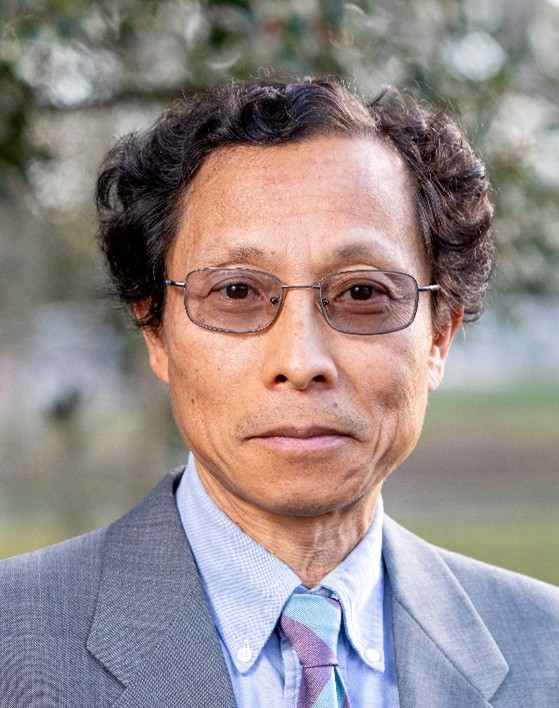
Prof. Fang Z. Peng
University of Pittsburgh
Presentation Title:
Biography
Fang Z. Peng received the B.S. degree from Wuhan University, China in 1983 and the MS and Ph.D. Degrees from Nagaoka University of Technology (Nagaoka Tech), Japan in 1987 and 1990. Dr. Peng is a scholar, inventor and engineer in high-voltage high-power (mega-watt or MW) power electronics. His research career consists of three periods: 1984-1994 at Nagaoka Tech, Toyo Electric Manufacturing Co., and Tokyo Institute of Technology (Tokyo Tech) in Japan; 1994-2000 at Oak Ridge National Laboratory (ORNL) USA; and since 2000 with academia: at Michigan State University (MSU), Florida State University (FSU) and now the University of Pittsburgh (Pitt). In 1984, he started his research at Nagaoka Tech and originated the active resistance (or active impedance) concept, a groundbreaking approach to blocking, compensating and mitigating harmonics in power systems, featuring as a lossless active/virtual resistor by a power converter to suppress harmonic resonances in power systems for the first time in the world. At Tokyo Tech, he pioneered the research on multilevel converters and flexible ac transmission systems. In 1994, he joined ORNL, became the lead scientist of ORNL’s Power Electronics and Electric Machinery Research Center, and invented delta-connected modular multilevel converter-based static synchronous compensator (Delta-connected MMC STATCOM). In 2000, he founded and directed a MW Power Electronics Research Center at MSU, originated the impedance-source (Z-source) concept, and invented the Z-source control. He became a University Distinguished Professor, the highest title designated by the MSU board of Trustees in 2012. From 2018 to 2024, he joined Florida State University as a Distinguished Professor of Engineering. Since 2024, Dr. Peng has been the RK Mellon Endowed Chair and Director of the Energy GRID Institute at University of Pittsburgh. His current research interest includes fault-tolerant power electronics and fire-free, self-healing and resilient power systems for propulsion, industrial motor drives, and electrical utility applications. He is a Fellow of the IEEE, a Fellow of the US National Academy of Inventors, and a Member of the U.S. National Academy of Engineering.
Abstract
As modern society’s reliance on electricity deepens, so does our vulnerability to its hazards and potential for catastrophic failures. This presentation weaves together a technical research pursuit and a personal lifelong journey to “tame the beast”—to create an electric power grid that is safer, more resilient, and more intelligent.
My fascination with electricity began in childhood, sparked by early experiences with both its power and its dangers. That curiosity guided me to study electrical engineering and, later, to pioneer technologies that mitigate harmful resonance and harmonics—phenomena once responsible for equipment damage and fires. In the 1980s, my research introduced the concepts of active and virtual resistance, leading to the world’s first hybrid active power filter using an inverter as an active resistance or impedance. The journey was not without setbacks: an early experiment ended in a shoot-through failure that destroyed our prototype. Yet that incident became a turning point, inspiring deeper investigation into inverter (or converter) technology and their fault tolerance and ultimately leading to the invention of the Z-source converter and inverter. For the first time, traditionally forbidden shoot-through switching states would no longer destroy inverters and could be even safely utilized rather than avoided.
In recent years, the devastating wildfires caused by downed power lines and faulty equipment in California, Hawaii, Florida, and beyond have reinforced the urgency of this work. Extending the Z-source concept to the broader power grid, we have demonstrated that if all power sources and components—transformers, overhead lines, underground cables, and power factor correction capacitors—can be made or controlled to behave like Z-sources, the grid can dynamically limit fault currents within microseconds, suppress sparks, and prevent resonances, instability, and fires.
This talk reflects on both a technological evolution and a personal mission: to make electricity not only powerful and efficient, but fundamentally safe and resilient. Looking forward, we aim to make the future power grid AI-ready—capable of AI-based modeling, design, optimization, operation, and control. By transforming all passive grid components into active and intelligent elements and developing new power and energy theories that generate rich data on system-level interactions, we can move toward an energy infrastructure that is truly adaptive, intelligent, and secure.
Plenary Session 59:05 - 9:35
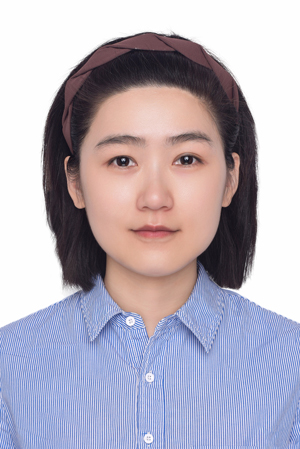
Prof. Yuting Gao
Wuhan University
Presentation Title: Research Progress of Flux Modulation Machines: Analysis, Design, and Application
Biography
Yuting Gao (Senior Member, IEEE) received the B.S. and Ph.D. degrees in electrical engineering from Huazhong University of Science and Technology, Wuhan, China, in 2012 and 2017, respectively. From 2017 to 2023, she was a Post-Doctoral Fellow at Huazhong University of Science and Technology, China, Karlsruhe Institute of Technology, Germany, and Nagoya Institute of Technology, Japan, respectively. Since 2023, she has been a Professor at Wuhan University, China. She serves as an Associate Editor of IEEE Transactions on Industry Applications and IEEE Transactions on Transportation Electrification. She has authored/coauthored more than 80 technical papers. Moreover, she is a recipient of the Science and Technology Invention Award (1st prize) from China Electrotechnical Society, the Gold Medal at the International Invention Exhibition in Geneva, Switzerland, and the Best Paper Award at the International Conference on Electrical Machines. Her research interests include the design and control of flux modulation permanent-magnet machines.
Abstract
Flux modulation machines (also known as magnetic geared machines) have attracted widespread attention due to their unique torque production mechanism and high torque density. This plenary speech presents a systematic overview from three perspectives. First, the operating principles are interpreted through distinct theoretical models. The differences and unity among these models are elaborated. Then, using the Maxwell stress tensor method, a comparative analysis is conducted to reveal the different torque generation mechanisms between stator-permanent magnet (PM) and rotor-PM flux modulation machines. Second, an efficient hierarchical optimization approach is introduced. By employing airgap flux density harmonics as the optimization objective instead of the torque target, the design computation speed is significantly enhanced. Third, a novel application of flux modulation machines in flywheel energy storage systems is presented. By replacing the PMs with AC excitation windings, the proposed machine can provide both active and reactive power for power grids, offering better grid support than conventional PM-based flywheel machines.
Plenary Session 69:40 - 10:10
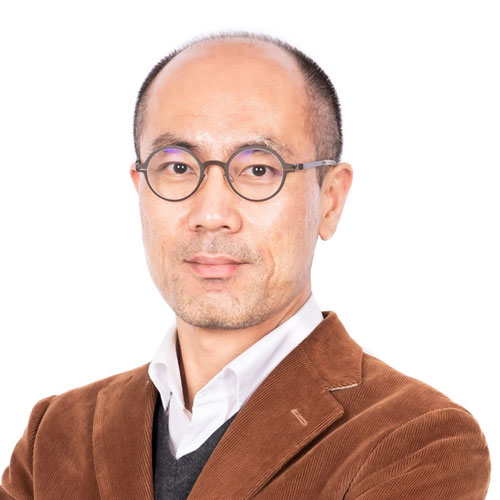
Prof. Sehoon Oh
Daegu Gyeongbuk Institute of Science and Technology
Presentation Title:Robot Control in the Era of Physical AI: Bridging the Gap Between Learning and Precision Control
Biography
Dr. Sehoon Oh is a Professor at the Department of Robotics and Mechatronics at the Daegu Gyeongbuk Institute of Science and Technology (DGIST), where he directs the Motion Control Lab. He received his Ph.D., M.S., and B.S. degrees in Electrical Engineering from The University of Tokyo. His academic career includes a visiting scholar appointment at The University of Texas at Austin, a guest scientist visit at the German Aerospace Center (DLR), and postdoctoral and research experience at The University of Tokyo, as well as industry experience at Samsung Heavy Industries. Dr. Oh's research focuses on advanced control and mechatronic system development for both robotic systems and mobility platforms. His work emphasizes high-precision servo control, model-based and optimal control design, disturbance rejection, and principled integration of data-driven methods into complex dynamical systems. By bridging rigorous control theory with large-scale experimental validation, he aims to develop interpretable, high-performance motion control architectures for next-generation robots and intelligent mobility systems.
Abstract
The rapid advancement of AI-driven humanoid robots has attracted tremendous attention worldwide. However, current AI humanoids face fundamental limitations: while they excel at balancing and locomotion through learning-based trajectory generation built on position control frameworks, they lack the ability to perform precise force-interactive tasks required in real industrial settings. From a motion control perspective, robot control is distinguished by two critical challenges - the inherently complex, multi-objective nature of robotic tasks and the strong nonlinearity of the target systems. This talk addresses the critical "missing pieces" in humanoid robotics by examining what differentiates robot control from conventional high-precision control across four key dimensions: (1) nonlinear/LPV systems versus LTI systems, (2) the challenge of system identification in complex robotic structures, (3) MIMO multi-task control versus SISO single-task control, and (4) the necessity of combined position/force control beyond pure position control. By advancing these approaches, I will demonstrate how the boundaries of conventional robot control can be overcome - ultimately enabling robots to accurately execute complex tasks involving both precise motion and force interaction in real-world environments.
DAY3: Wednesday, June 3, 2026
Plenary Session 78:30 - 9:00
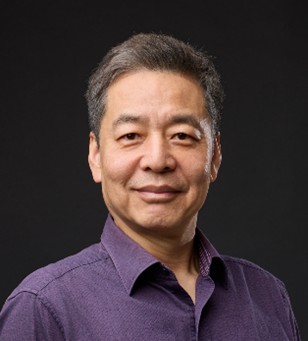
Prof. Sewan Choi
SEOULTECH
Presentation Title:EV OBC at a Turning Point: Beyond Two-Stage Limits to De-Risked, Cost-Competitive Single-Stage Architectures
Biography
Dr. Sewan Choi is an IEEE Fellow and a Professor in the Department of Electrical and Information Engineering at Seoul National University of Science and Technology. He received the Ph.D. degree in Electrical Engineering from Texas A&M University in 1995 and has led both industrial and academic innovation in power electronics for more than three decades. Dr. Choi has served as President of the KIPE in 2021, TPC Chair of ICPE2019, and Chair of the IEEE PELS Seoul Section. He also served as Associate Editors of IEEE Transactions on Power Electronics, Industry Applications, and JESPT. He was the recipient of several IEEE Conference and Journal paper awards including TPEL First and Second Prize Paper Awards. His research focuses on high-power-density, high-efficiency power conversion for EV on-board/off-board charging and advanced e-mobility power systems.
Abstract
The EV on-board charger (OBC) market is growing rapidly, while higher power levels and bidirectional functions are becoming mainstream requirements. Conventional two-stage OBCs remain the baseline, but their intermediate energy-storage approach-often dominated by aluminum electrolytic capacitors-continues to constrain packaging and long-term robustness under ripple/thermal stress. Recent commercial implementations also indicate that highly integrated single-stage directions are no longer purely academic, signaling an industry inflection point. This plenary first summarizes the status and trends of EV OBC architectures, then presents our single-stage architecture and implementation methodology aimed at scalable commercialization. The core contribution is a practical de-risking approach that makes single-stage designs viable in three decisive aspects: stable control and fast dynamics across operating conditions, robust bidirectional/V2X operation under grid and load nonidealities, and cost-competitive integration that reduces system cost. Comparative analysis and prototype validation results are used to substantiate the approach and clarify the remaining engineering gaps.
Plenary Session 89:05 - 9:35
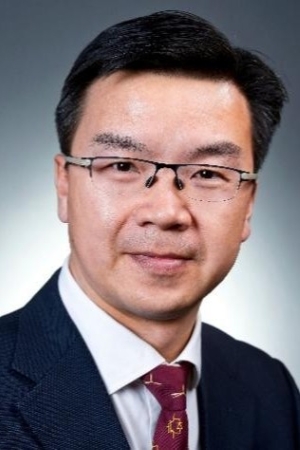
Prof. Jinjun Liu
Xi’an Jiaotong University
Presentation Title: The Quest for a Fully Autonomous Distribution-Grid/Microgrid Incorporating DERs
Biography
Jinjun Liu ( Fellow IEEE, Fellow CPSS ) received the B.S. and Ph.D. degrees in electrical engineering from Xi’an Jiaotong University (XJTU), Xi’an, China, in 1992 and 1997, respectively.
He then joined the XJTU Electrical Engineering School as a faculty. From late 1999 to early 2002, he was with the Center for Power Electronics Systems, Virginia Polytechnic Institute and State University, Blacksburg, VA, USA, as a Visiting Scholar. In late 2002, he was promoted to a Full Professor and then the Head of the Power Electronics and Renewable Energy Center at XJTU, which now comprises over 30 faculty members and around 300 graduate students and carries one of the leading power electronics programs in China. From 2005 to early 2010, he served as an Associate Dean of Electrical Engineering School at XJTU, and from 2009 to early 2015, the Dean for Undergraduate Education of XJTU. He is currently a XJTU Distinguished Professor of Power Electronics. He coauthored 3 books (including one textbook), published over 500 technical papers in peer-reviewed journals and conference proceedings, and holds over 100 invention patents (China/US/EU). His research interests include modeling, control, and design methods and reliability evaluation and monitoring for power converters and electronified power systems, power quality control and utility applications of power electronics, and micro-grid techniques for sustainable energy and distributed generation.
Dr. Liu received for many times governmental awards at national level or provincial/ministerial level for scientific research/teaching achievements. He also received the 2006 Delta Scholar Award, the 2014 Chang Jiang Scholar Award, the 2014 Outstanding Sci-Tech Worker of the Nation Award, the IEEE Transactions on Power Electronics 2015, 2020, and 2024 Prize Paper Awards and 2024 Prize Letter Award, the 2016 State Council Special Subsidy Award, the Nomination Award for the Grand Prize of 2020 Bao Steel Outstanding Teacher Award, the 2022 Fok Ying Tung Education and Teaching Award, the 2022 National Prominent Teacher Award, the 2025 IEEE PELS Harry A. Owen, Jr. Distinguished Service Award, and the 2025 China National Textbook Award. He served as the IEEE Power Electronics Society Region 10 Liaison and then China Liaison for 10 years, an Associate Editor for the IEEE TRANSACTIONS ON POWER ELECTRONICS since 2006, and 2015-2021 Vice President of IEEE PELS. He was on the Board of China Electrotechnical Society 2012-2020 and was elected the Vice President in 2013 and the Secretary General in 2018 of the CES Power Electronics Society. He was 2013-2021 Vice President for International Affairs, China Power Supply Society (CPSS), and since 2016, the inaugural Editor-in-Chief of CPSS Transactions on Power Electronics and Applications. He was elected the President of CPSS in Nov. 2021 and re-elected for the second term in Nov. 2025. Since 2013, he has been serving as the Vice Chair of the Chinese National Steering Committee for College Electric Power Engineering Education Programs.
Abstract
For more electronic future power systems, the coordinative control of a distribution-grid/microgrid incorporating distributed energy resource (DER) converters is to ensure the system voltage to be within a nominal magnitude/frequency range and adequate output power sharing among all these energy sources with enough stability margin, and at the same time to guarantee fast and smooth transfer of the microgrid, if there is one, transferring between islanded mode and grid-connected mode. This is very often required to be realized through fully autonomous control where each source converter or the transfer switch is controlled by its own without getting or sensing any information from others or a center controller so that a higher reliability and an easy-to-implement plug-and-play feature could be achieved. The requirement for a fully autonomous grid-organizing framework has been well fulfilled and made a significant benefit for today’s existing power systems, but will be a really critical challenge for future’s more electronic distribution-grid/microgrid. A review of state-of-art techniques to ensure autonomous coordinating of DERs as well as stability margin for the whole system is supplied together with a discussion of future perspectives. A whole-new concept device, Flexible Transfer Converter (FTC), is proposed to enable the fully-autonomous coordinative control of a microgrid. Through the FTC, the interfacing power of the micro-grid with the large grid can also be continuously adjusted; soft transfer can be achieved; and the speed and smoothness of the transfer can be dramatically improved, while all of these can not be realized by existing operation-mode-transfer techniques fundamentally.
Plenary Session 99:40 - 10:10
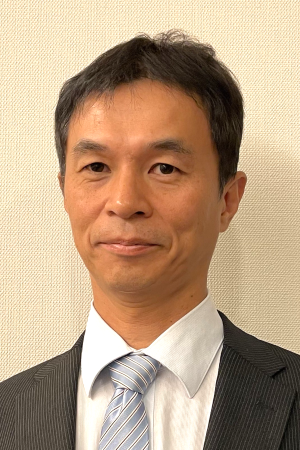
Dr. Kansuke Fujii
Fuji Electric Co., Ltd.
Presentation Title: Developing Power Conditioning System (PCS) for Renewable Energy in Japan
Biography
Kansuke Fujii (M’02–SM’16) received B.E. and M.E. degrees in electrical engineering from the Tokyo Institute of Technology, Tokyo, Japan, in 1995 and 1997, respectively, and a Dr. Ing. degree from RWTH Aachen University, Germany, in 2008.
He joined Fuji Electric Corporate R&D Co., Ltd. (now Fuji Electric Co., Ltd.) in 1997. From 2003 to 2005, he was on leave as a Research Associate at the Institute for Power Electronics and Electrical Drives, RWTH Aachen University.
His research interests include topologies and controls for medium-voltage converters. He has been involved in the development of Static Var Compensators (SVC), Uninterruptible Power Supplies (UPS), and Power Conditioning Systems (PCS), ranging from 100 kW to 100 MW. Currently, he is a Senior Manager in the development department of the Fuji Electric Energy Business Group.
He is a Fellow of the Institute of Electrical Engineers of Japan (IEEJ) and a registered Professional Engineer (P.E.) in the State of Oregon. He received the Best Paper Award at PESC in 2004 and PCIM Asia in 2012.
Abstract
Japan is changing its energy policy to reach “Carbon Neutrality by 2050”. Under the “6th Strategic Energy Plan,” renewable energy is now a main power source. Because of new market rules (the FIP system), power companies must now manage electricity more efficiently and help keep the power grid stable. This presentation explains the latest technology for Power Conditioning System (PCS) and Fuji Electric’s efforts.
In Japan, the market is moving away from large central systems. Instead, more companies are using string systems. These are easier to install in different places and reduce the risk of a total system failure. Fuji Electric uses its strength in making its own power semiconductors to develop special products for both solar power (PV) and energy storage systems (ESS).
For PV systems, we focus on lightweight and compact designs. This allows workers to install them on mountains or rough land without using heavy machinery. On the other hand, for energy storage system (ESS), we focus on sound noise for various environments. We also added an idling stop function. This allows the system to start very quickly, making it more competitive in the energy market.
As we use more renewable energy, the power grid can become unstable. To solve this, our ESS units use virtual inertia technology. This technology detects small changes in frequency within milliseconds and fixes them immediately.
We believe that our power electronics technology will lead the way to a green, carbon-free society and a stronger power infrastructure in Japan.